

Free Workplace Evacuation Assessment Tool
Designed for WHS, facilities and operations teams who need clear, practical next steps.
This free workplace evacuation assessment tool is also designed to help emergency managers and safety teams ensure compliance with workplace safety regulations, including OSHA.
✅ Takes less than 60 seconds ✅ Instant evacuation readiness score ✅ PDF report emailed to you
✅ Covers staff, visitors and contractors ✅ Includes practical recommendations
Used by safety-focused sites world-wide
Evacuation Readiness Assessment
Answer five quick questions to check your workplace evacuation readiness and receive an audit-ready PDF report by email.
Takes less than 60 seconds • Detailed PDF report
A current and tested evacuation plan reduces confusion and delays during emergencies.
Accurate roll-call processes ensure everyone is accounted for during an evacuation.
Visibility of who is onsite is critical for fast and accurate emergency response.
Visitors and contractors must be accounted for just like employees during emergencies.
Clear and fast communication reduces panic and ensures coordinated action.
We’re generating your summary. Please wait a moment.
How the emergency evacuation assessment works
A quick assessment of planning, roll-call, onsite visibility and emergency communication.
Our free workplace evacuation assessment tool guides you through the process using practical tools and resources, such as templates, to help you build out your emergency evacuation plan and improve your overall preparedness.
It is important to have a comprehensive communication plan and coordinate with emergency responders and internal teams to ensure clear, timely communication and effective evacuation procedures.
See your current evacuation risk level based on your answers. The tool helps you evaluate your workplace safety and highlights areas that need improvement.
Testing and evaluating your emergency preparedness is essential to ensure your procedures are effective and compliant. Consider using mobile emergency evacuation apps for real-time updates and notifications during emergencies.
Make sure at least two designated escape routes are mapped from every room or work area, and coordinate with building management to keep these escape routes clear and accessible. Remember that certain equipment and processes may need to be shut down in stages during an evacuation.
We email you a tailored PDF report you can share internally or keep for audit preparation. Workplace evacuation assessment tools require thorough risk identification and practical testing to be effective, so your report includes actionable recommendations and resources to support your ongoing safety efforts.
The report also includes recommendations for testing your evacuation procedures through drills and tabletop exercises, such as FEMA’s Tabletop Exercises, to test team reactions to different scenarios.
It highlights the importance of regular tests and coordination with emergency responders. For further planning, consider using OSHA’s Expert System to generate custom Emergency Action Plans in just 10-15 minutes.
What this assessment checks
This tool highlights common gaps that slow evacuations and make roll-call unreliable—especially when visitors and contractors are onsite.
You’ll be assessed on:
- Evacuation plan currency and drill cadence
- Roll-call / head count process reliability (a reliable head count is essential for accountability and ensuring all personnel are safe)
- How accurately you know who is onsite (including visitors and contractors)
- Communication methods and backup procedures
- Accountability for wardens, supervisors, and evacuation roles, including clear emergency action plans for all personnel
- How you evaluate the effectiveness of emergency evacuation procedures and emergency action plans, including how you test alarm systems and procedures through regular evacuation drills
- Whether evacuation procedures account for employees with special needs and if evacuation wardens are trained to assist them
- The presence of an evacuation map that clearly marks evacuation routes, exits, and assembly points
- The use and practice of emergency notifications, including testing notification procedures during evacuation drills
What’s included in your PDF report
- Your evacuation readiness score and risk level
- A summary of your responses
- The key gaps increasing evacuation risk
- Recommended next steps (prioritised)
- Notes you can share with WHS, facilities or operations
- Inclusion of all critical elements in your emergency evacuation plan to ensure comprehensive coverage and compliance
- A visual evacuation map based on your specific floor plan, with clearly marked evacuation routes, assembly points, hazard zones, fire extinguishers, first aid kits, and emergency exits to guide people during an emergency
- Recommendations to ensure compliance with safety regulations
- Additional resources to help improve your workplace evacuation readiness, such as training materials and documentation templates
Frequently asked questions
Does the assessment align with OSHA requirements?
Yes. The assessment is designed to help you meet OSHA requirements for emergency preparedness and evacuation procedures, supporting regulatory compliance and safety readiness.
How often should we conduct drills and training?
Regular drills should be conducted at least every six months.
Training employees to carry out the evacuation plan is essential for ensuring their safety and preparedness during an emergency.
Why do you ask for my email?
We use your email to send your personalised PDF report and score so you can save or share it internally.
What should I do if I get a high-risk score?
Start with improving onsite visibility and roll-call accountability. Your report includes prioritised recommendations.
What is an emergency evacuation plan?
An emergency evacuation plan is a strategic document designed to ensure employees’ are safe and efficient exit from a building during an emergency.
Using a template to build out your emergency evacuation plan is the best way to ensure you’ve prepared everything you need for a smooth evacuation.
The plan should identify safe zones and assembly areas where employees, visitors, and contractors can gather during an emergency to ensure everyone is accounted for, including those with special needs.
Key resources for workplace evacuation assessments include the OSHA Evacuation Plans and Procedures eTool, Ready.gov business risk assessment resources, and templates from SafetyCulture.
Why evacuation readiness breaks down
Most workplaces have an evacuation plan. Fewer can confirm—quickly and accurately—who is onsite during an incident.
Delays usually happen when roll calls rely on traditional methods such as manual processes or paper sign-in, or when visitor/contractor visibility isn’t included in roll-call. Compared to these traditional methods, modern solutions significantly improve evacuation preparedness by enabling faster, more accurate headcounts and streamlined emergency response.
Preparedness and compliance with OSHA standards are critical for effective emergency planning. It is essential to plan for different threats and scenarios, including fire, gas leaks, chemical spills, hazardous materials, disasters, and other emergencies. A disorganised evacuation can result in confusion, injury, and property damage.
To protect your personnel and evacuate safely, you must develop a comprehensive evacuation process for your entire facility, including procedures for shutting down equipment and accounting for all personnel. Emergency evacuation drills help reduce the delay, hesitation, and misguided actions that could put employees at risk. With a well-defined emergency evacuation plan, businesses can minimize confusion, reduce the risk of injury, and ensure compliance with safety regulations.
Reduce your WHS risk with VisitUs
Address the gaps identified in your evacuation assessment with a modern, automated visitor and contractor management system built for manufacturing environments.
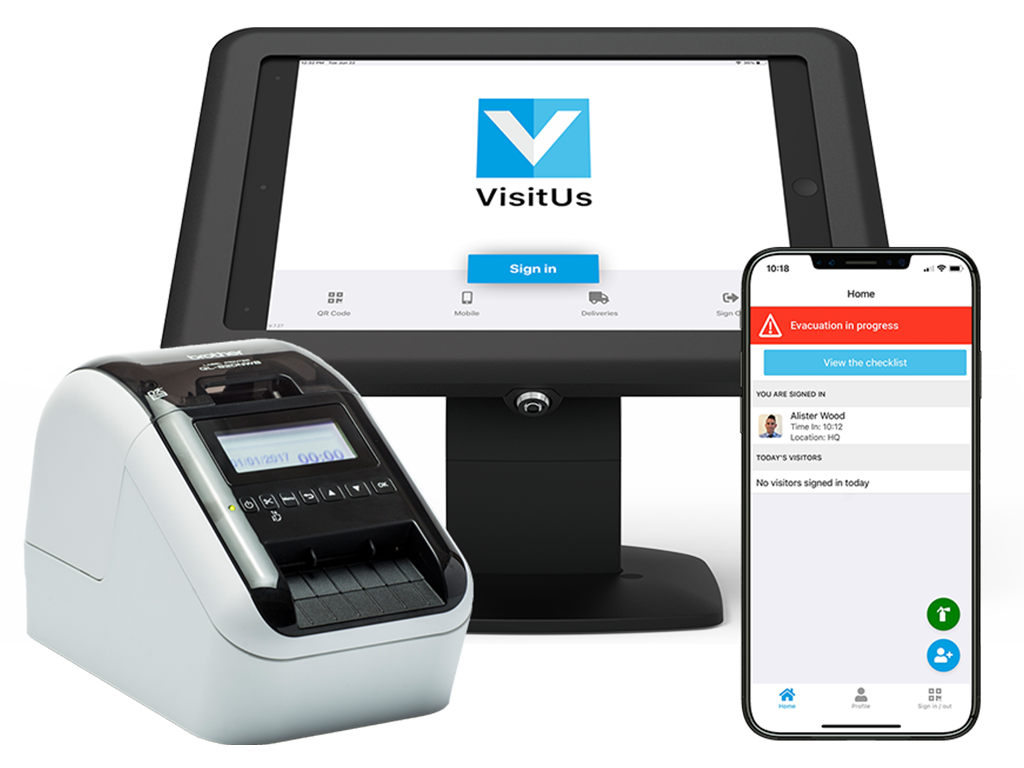
Want real-time onsite visibility of evacuation routes during an evacuation?
If your workplace relies on manual sign-in or has limited visitor/contractor visibility, it’s harder to run a fast and accurate roll-call.